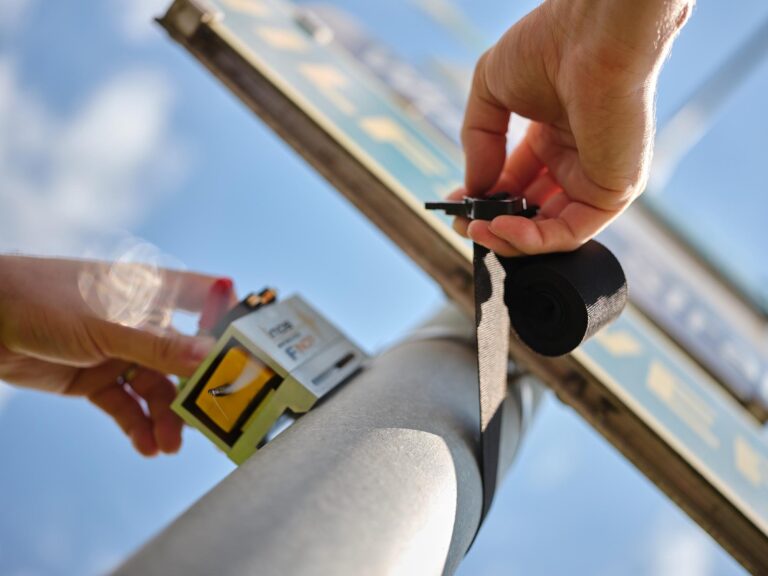
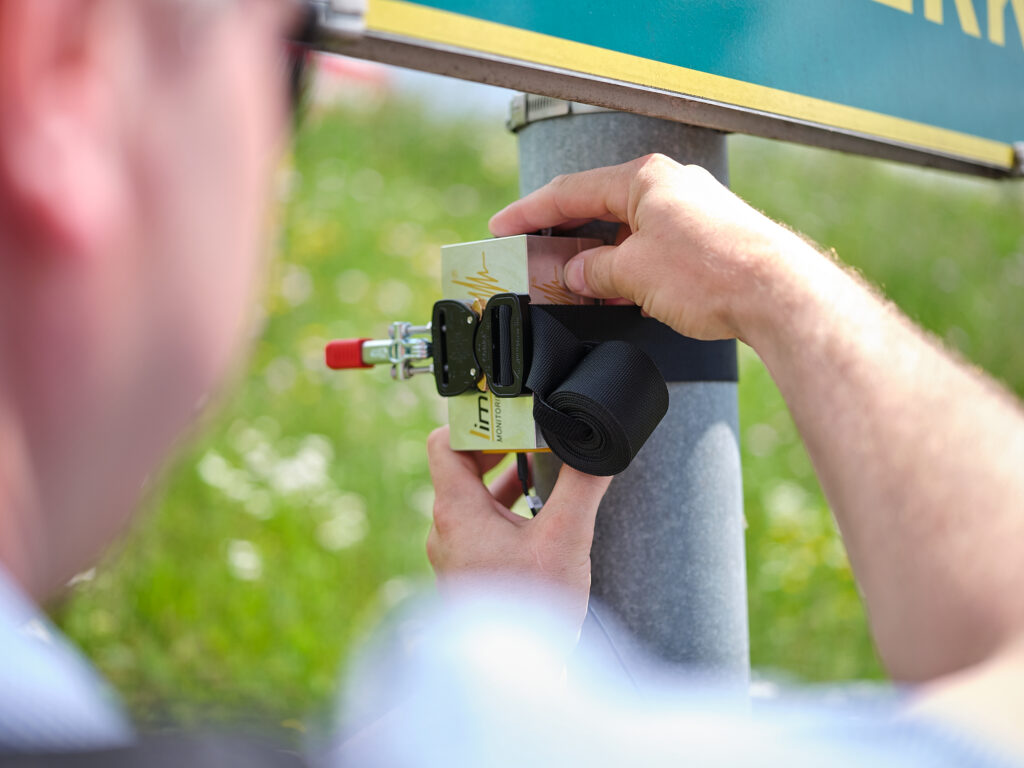
Steel and aluminium poles are ubiquitous – along roads, on company premises, and at sports facilities. They are part of our everyday lives. These engineering structures have a limited service life and are exposed to numerous adverse influences such as moisture, condensation, and aggressive, acidic soils. Over time, these factors lead to material fatigue and corrosion. Corrosion in particular can result in a reduction of the cross-sectional area and consequently cause a significant decrease in load-bearing capacity.
To ensure structural stability, stability inspections of single-shaft poles are essential!
Minimise liability risks and avoid downtime. We support you and help ensure greater safety in public spaces! Here you can find more information about the measurement method and the inspection procedure.
Structural Assessment for Revised Load Conditions
Lighting poles and floodlight poles are designed and manufactured according to the load specifications and standards applicable at the time of installation, with dimensions varying depending on the manufacturer and intended use. During the service life of these infrastructure assets, changes in loading standards may occur. In addition, there is often a need to install additional loads such as traffic signs or directional signs on existing poles, or to replace luminaires and floodlights in order to optimise lighting conditions or improve energy efficiency.
In such cases, facility operators are required to carry out regular structural stability inspections and/or provide structural verification for modified load specifications in order to avoid liability in the event of damage or failure.
We support you with the assessment and structural stability inspection of poles, including structural verification for modified load specifications, for all single-shaft lighting poles with a mounting height of 3 to 12 metres and floodlight poles with heights ranging from 12 to 20 metres.
Our Services & Your Benefits
No traffic restrictions required
Walk-by system (minimal space requirements)
Non-destructive structural stability inspections throughout the DACH region (Germany, Austria and Switzerland)
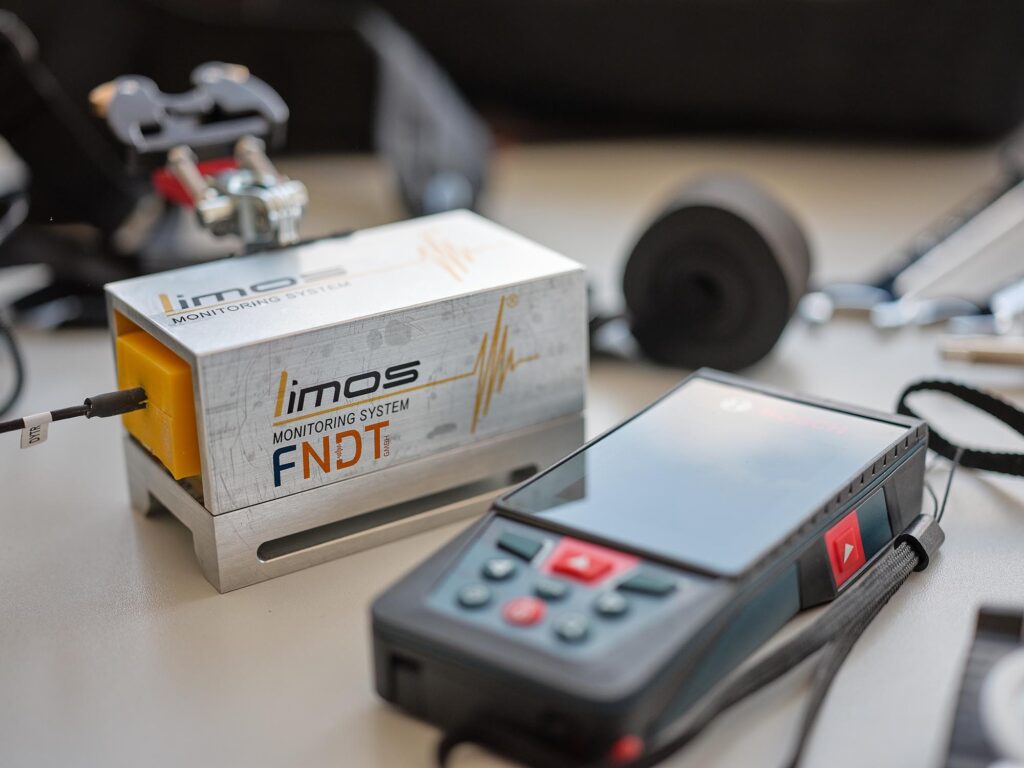
Precise vibration measurements using state-of-the-art technology
Initial assessment available immediately on site
Structural calculations in accordance with current standards and regulations
Measurement documentation includes: individual inspection reports, GPS and photo documentation, recommendations for required actions, and clear Excel-based evaluation reports
Data delivery can be adapted to the interfaces of any asset management or specialist information system